


Efficacy
The efficacy of PREZCOBIX in adults with HIV-1 infection was demonstrated in clinical trials of darunavir co-administered with ritonavir [see darunavir full Prescribing Information].1
ARTEMIS was a randomized, Phase III, open-label, multinational, 192-week (N=689) study in treatment-naïve patients with HIV-1 RNA ≥5000 copies/mL. Adult participants were randomized to receive either a total daily dose of DRV/r 800/100 mg or LPV/r 800/200 mg. The primary endpoint was to demonstrate noninferiority in virological response of HIV-1 RNA <50 copies/mL at Week 48. One of the secondary endpoints assessed virological response at Week 192.2,3
ODIN was a randomized, phase III, 48-week, open-label (N=590) study to establish noninferiority of once-daily DRV/r 800/100 mg to twice-daily DRV/r 600/100 mg in treatment-experienced adult patients (with no DRV RAMs at screening) in confirmed virological response (HIV-1 RNA <50 copies/mL) at Week 48.4

In the ARTEMIS trial3:
- At Week 192, the virological response in the ITT population was 68.8% for the DRV/r group and 57.2% for the LPV/r group. The difference in virological response between the treatment groups was 11.6% (95% CI: 4.4 to 18.8).
- 81.3% of the patients in the DRV/r arm with a confirmed virological response of <50 copies/mL at Week 48 maintained that response even at Week 192 vs 68.5% in the LPV/r arm
- Patients in the DRV/r group had a statistically superior virological response compared with those in the LPV/r group (baseline HIV-1 RNA <100,000 copies/mL: 69.5% vs 60.2% [P=0.038; estimated difference in response 9.3%; 95% CI: 0.5; 18.1%], respectively; baseline HIV-1 RNA ≥100,000 copies/mL: 67.5% vs 51.7% [P=0.012; estimated difference in response 15.9%; 95% CI: 3.5; 28.3%], respectively)
- Patients in the DRV/r group with baseline CD4 count ≥200 cells/µL had statistically superior virological response rates vs those in the LPV/r group (71.3% vs 59.6%, respectively; P=0.014; estimated difference in response 11.7%; 95% CI: 2.4; 21.0%)
- Within the subgroup with baseline CD4 counts <200 cells/µL, 65.2% of DRV/r patients achieved HIV-1 RNA <50 copies/mL, compared to 54.1% of LPV/r patients. The difference between groups was not statistically significant for superiority
- A virological response, consistent with the primary endpoint was also observed in the DRV/r arm vs the LPV/r arm across gender, race, region, age and clade subgroups
Resistance
PREZCOBIX: Has a High Genetic Barrier to Resistance to Help Preserve ARV Susceptibility1
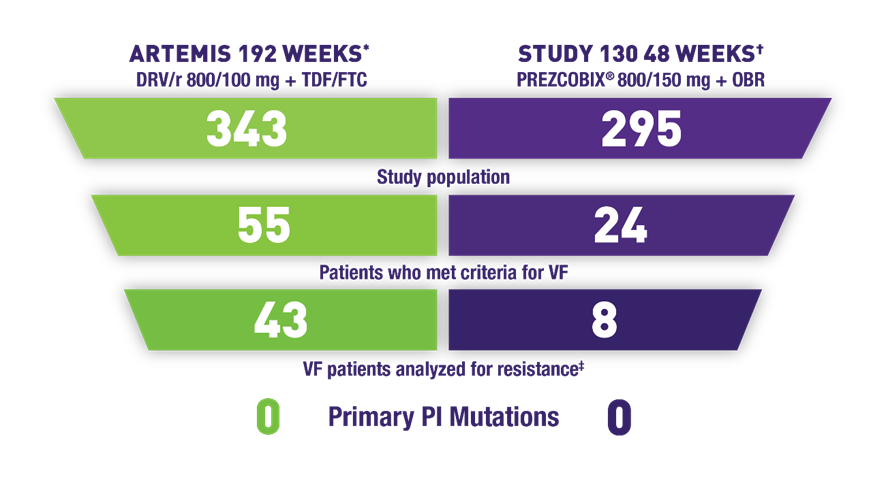
The absence of primary PI mutations does not imply clinical results
- ARTEMIS: 4 patients developed NRTI mutations (M184V)§
- Study 130: 1 patient developed an NRTI mutation (M184V)II
- Zero patients developed the K65R mutation in either study
A low number of treatment-experienced adult patients developed mutations1
- ODIN¶ 48 weeks, DRV/r 800/100 mg + OBR (n=294): 1 patient developed primary PI mutations (V32I, L76V, I84V)#
- Study 130 48 weeks, PREZCOBIX + OBR (n=18): 1 patient developed a primary PI mutation (I84I/V); 1 patient developed an NRTI mutation (M184V)
- Zero patients developed the K65R mutation in either study
ARV=antiretroviral; DRV=darunavir; DRV/r=darunavir coadministered with ritonavir; LPR/r=lopinavir/ritonavir; NRTI=nucleoside reverse transcriptase inhibitor; OBR=optimized background regimen; PI=protease inhibitor; RAM=resistance-associated mutation; TDF/FTC=tenofovir disoproxil fumarate/emtricitabine; TE=treatment experienced; TN=treatment naïve; VF=virologic failure.
* Phenotypic data were determined by Antivirogram®. In this test, resistance was defined as a fold change in the 50% effective concentration above the biological/clinical cutoff.
† Study 130: An open-label, single-arm, 48-week, Phase 3 clinical trial evaluating the safety and efficacy of once-daily darunavir, or DRV, 800 mg (2 x 400 mg) + cobicistat, or COBI, 150 mg in HIV-1-infected TN adults (n=295) and TE adults (n=18) with HIV-1 RNA ≥1000 copies/mL and no DRV RAMs (V11I, V32I, L33F, I47V, I50V, I54L, I54M, T74P, L76V, I84V, and L89V). PhenoSense® GT assay; samples with >400 HIV-1 RNA copies/mL were analyzed.
‡ Resistance analysis conducted in patients who had paired genotypic data at baseline and endpoint.
§ None of the subjects had a decreased susceptibility to DRV at virologic failure.
II One TE patient developed a DRV resistance-associated substitution, which was not associated with a decreased susceptibility to DRV. In addition, the patient did not have decreased susceptibility to other PIs. Two patients (one TE and one TN) developed an NRTI resistance-associated substitution, which was associated with a decreased susceptibility to the NRTIs included in their treatment regimens.
¶ ODIN: A randomized, open-label, 48-week, Phase 3 noninferiority clinical trial comparing darunavir 800 mg coadministered with ritonavir 100 mg once daily vs darunavir 600 mg coadministered with 100 mg ritonavir twice daily in TE adult patients with viral load >1000 copies/mL and no DRV RAMs (V11I, V32I, L33F, I47V, I50V, I54L, I54M, T74P, L76V, I84V, and L89V). 60 patients had paired genotypic data at baseline and endpoint.
# One patient, who had previously been treated with lopinavir/ritonavir, developed PI mutations V32I, L76V, and I84V, which in combination were associated with a 24-fold decreased susceptibility to DRV.
PhenoSense GT is a registered trademark of Monogram Biosciences.
Reference: 1. Data on file. Janssen Therapeutics, Division of Janssen Products, LP.
Selected Sections From the DHHS Guidelines:
When to Consider Boosted Darunavir (including PREZCOBIX (darunavir/cobicistat)) in Initial HIV Treatment for Adults1†

First-Line Scenario (DHHS Guidelines) for Most People with HIV1
- Initiating ART before resistance results are available (e.g., rapid initiation) in patients with a history of CAB-LA as PrEP
- Boosted darunavir with (TAF or TDF) plus (FTC or 3TC) pending the results of genotypic testing
- Includes regimens containing DRV/c (PREZCOBIX) due to darunavir's high genetic barrier to resistance
- Boosted darunavir with (TAF or TDF) plus (FTC or 3TC) pending the results of genotypic testing
Specific Clinical Scenarios Supporting Use of a Boosted PI (including darunavir) in Combination With Other HIV Medications1
- Documented INSTI resistance
- Suspected or documented INSTI resistance AND when concern about renal or bone-associated AEs prevents the use of TDF or TAF
- As an option for patients with concerns about adherence to ART
When to Consider boosted darunavir (including PREZCOBIX (darunavir/cobicistat)) in Treatment-Experienced Patients1,2
- Boosted darunavir is recommended as an option in combination with other HIV medications in the setting of virologic failure due to its high genetic barrier to resistance
- Boosted darunavir is also recommended as an option in combination with other HIV medications for regimen optimization in patients who are virologically suppressed with existing NRTI resistance
ART = antiretroviral therapy; CAB-LA = cabotegravir long-acting; INSTI = integrase strand transfer inhibitor; NRTI = nucleoside reverse transcriptase inhibitor; TAF = Tenofovir Alafenamide; TDF = Tenofovir Disoproxil Fumarate; FTC = Emtricitabine; 3TC = Lamivudine; PI = Protease Inhibitor; AEs = Adverse Events; PrEP = Pre-Exposure Prophylaxis; HIV = Human Immunodeficiency Virus
†PREZCOBIX (DRV/c) is not recommended during pregnancy; refer to DHHS Perinatal Guidelines
References: 1.Department of Health and Human Services. Guidelines for the Use of Antiretroviral Agents in Adults and Adolescents With HIV. Updated September, 2025. Available at: Clinicalinfo Adult & Adolescent ARV Guidelines 2. Department of Health and Human Services. Management of People With HIV and Antiretroviral Therapy Experience (Virologic Failure section). Available at: Clinicalinfo Virologic Failure Section
Patients at Risk
Do These Patient Factors Impact Your ARV Choice?

Clinical:
- Compliance risk unknown (eg, rapid initiation, newly diagnosed, uncertain adherence)
- With no experience with chronic medication
- Prior low-level viremia
- Associated side effects
- Demonstrated resistance to prior ARV therapy
- No ARV history

Lifestyle/Attitude:
- Busy, irregular schedule (eg, flight attendant, shift work, night classes)
- Psychosocial issues (eg, unstable housing, unemployment, lack of social support)
- Out-of-pocket expenses
- Need for convenience
ARV=antiretroviral.
Reference: Department of Health and Human Services. Guidelines for the use of antiretroviral agents in adults and adolescents with HIV. Updated September 25, 2025. Accessed June 18, 2026.
M184V/I Prevalence
Emerging High-Level Resistance May Impact Future Treatment Options
Emerging DRMs in serial genotype-tested HIV patients (2010-2017):
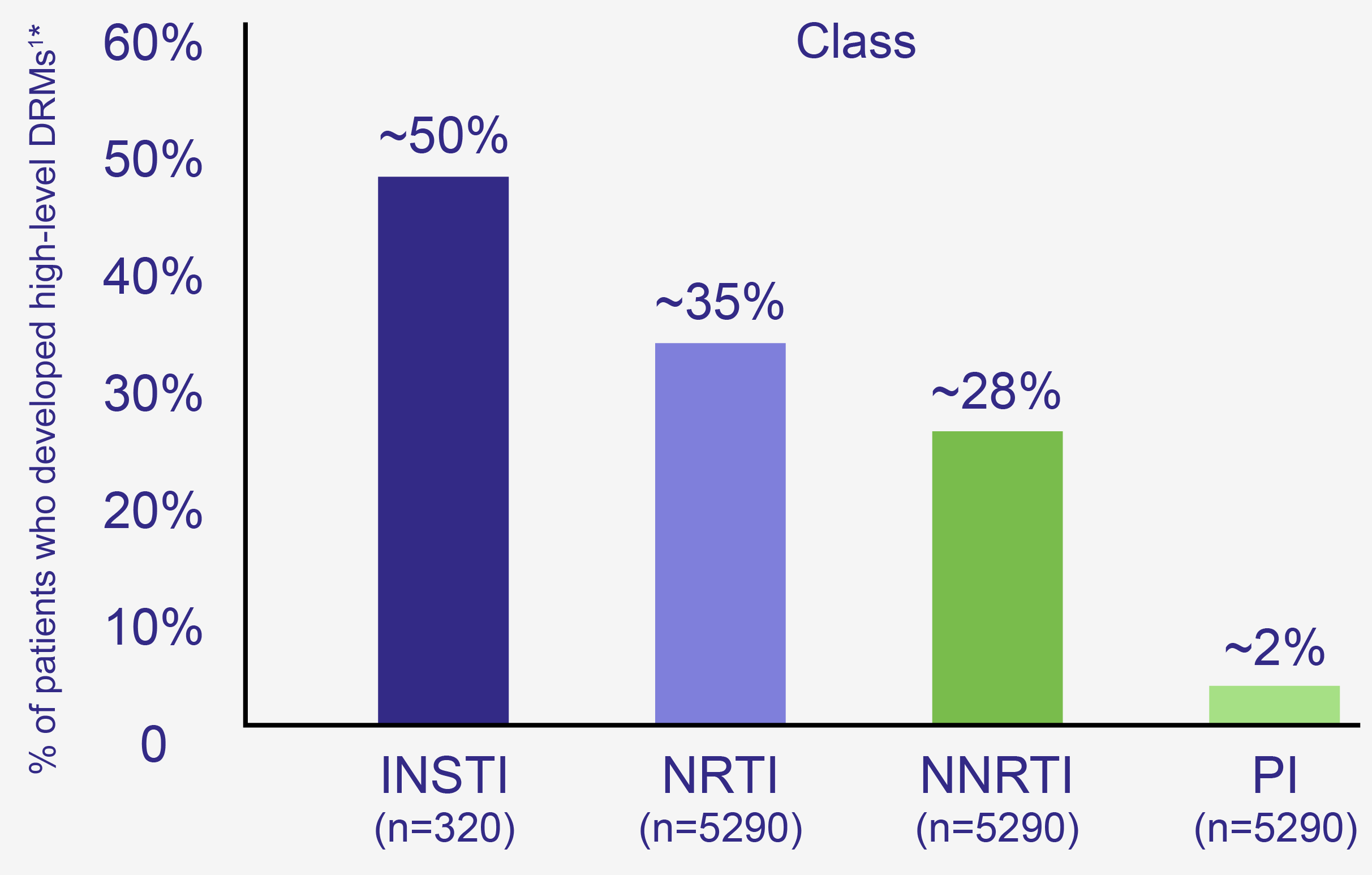
ARV=antiretroviral; DRM=drug resistance mutation; INSTI=integrase strand transfer inhibitor; NNRTI=non-nucleoside reverse transcriptase inhibitor; NRTI=nucleoside reverse transcriptase inhibitor; PI=protease inhibitor; STR=single tablet regimen.
*The presence of drug resistance mutations may not correlate with clinical outcomes.
References: 1. Kagan RM, Dunn KJ, Snell GP, et al. Trends in HIV-1 drug resistance mutations from a U.S. reference laboratory from 2006 to 2017. AIDS Res Hum Retroviruses. 2019;35(8):698-709. doi:10.1089/AID.2019.0063 2. Department of Health and Human Services. Guidelines for the use of antiretroviral agents in adults and adolescents with HIV. Updated September 25, 2025. Accessed June 18, 2026.
SAFETY & TOLERABILITY
Once-daily PREZCOBIX: Known safety profile with low discontinuation rates due to adverse events1,2
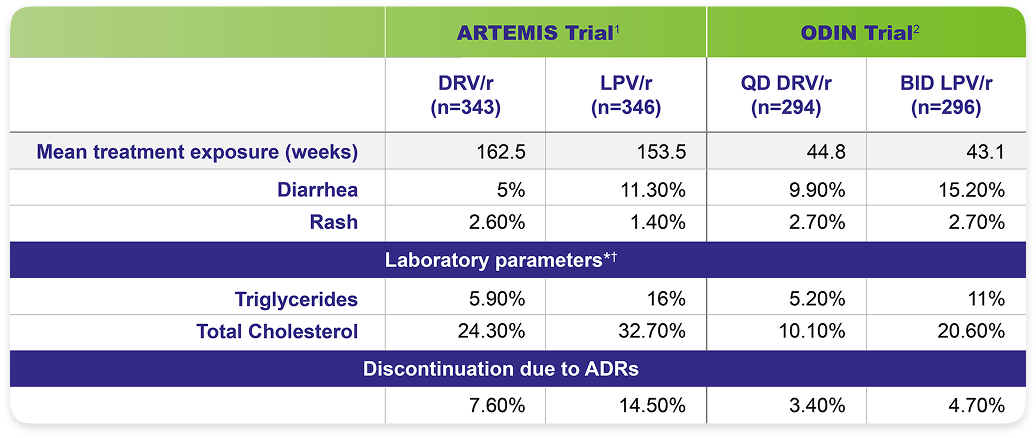
The most frequently reported adverse events considered at least possibly related to treatment (≥5% incidence) were diarrhea, nausea, rash, headache, abdominal pain, and vomiting.2,3
Direct comparisons should not be made between data from separate clinical trials.3
Adverse drug reaction rates observed in clinical trials may not reflect the rates observed in clinical practice.3
*ODIN: Triglycerides [500 mg/dL]. Total cholesterol [240 mg/dL].
†ARTEMIS: Based on the Division of AIDS table for grading the severity of adult and pediatric AEs.
ADRs=adverse drug reactions; ARTEMIS=antiretroviral therapy with TMC114 examined in naïve subjects; BID=twice daily; ODIN=once-daily darunavir in treatment-experienced patients; QD=once daily.
Reference: 1. Orkin C, DeJesus E, Khanlou H, et al. Final 192-week efficacy and safety of once-daily darunavir/ritonavir compared with lopinavir/ritonavir in HIV-1-infected treatment-naïve patients in the ARTEMIS trial. HIV Med. 2013;14(1):49-59. doi:10.1111/j.1468-1293.2012.01060.x 2. Cahn P, Fourie J, Grinsztejn B, et al. Week 48 analysis of once-daily vs. twice-daily darunavir/ritonavir in treatment-experienced HIV-1-infected patients. AIDS. 2011;25(7):929-39. doi:10.1097/QAD.0b013e328345ee95 3. PREZCOBIX [Prescribing Information]. Titusville, NJ: Janssen Therapeutics, Division of Janssen Products, LP.
DHHS Guidelines: Weight
Selected Sections From the DHHS Guidelines: Weight Gain
ART=antiretroviral therapy; ARV=antiretroviral; BIC=bictegravir; DHHS=Department of Health and Human Services; DTG=dolutegravir; EFV=efavirenz; EVG/c=elvitegravir/cobicistat; INSTl=integrase strand transfer inhibitor; NNRTI=non-nucleoside reverse transcriptase inhibitor; Pl=protease inhibitor; TAF=tenofovir alafenamide; TDF=tenofovir disoproxil fumarate.
References: 1. Department of Health and Human Services. Guidelines for the use of antiretroviral agents in adults and adolescents with HIV. Updated September 25, 2025. Accessed June 18, 2026. 2. Chandiwana NC, Siedner MJ, Marconi VC, et al. Weight Gain After HIV Therapy Initiation: Pathophysiology and Implications. J Clin Endocrinol Metab. 2024;109(2):e478-e487. doi:10.1210/clinem/dgad411 3. Koethe JR, Lagathu C, Lake JE, et al. HIV and antiretroviral therapy-related fat alterations. Nat Rev Dis Primers. 2020;6:48. doi:10.1038/s41572-020-0181-1
Patients at Risk: Weight
What Patient Factors Weigh Into Your ARV Choice?
ARV-RELATED WEIGHT CONSIDERATIONS

Demography-related
- Race
- Gender
- BMI

Disease stage
Reflected by low baseline CD4 cell count and high baseline HIV RNA

Treatment-related
Current ART being used
ART=antiretroviral therapy; ARV=antiretroviral; BMI=body mass index; CD4=cluster of differentiation 4; RNA=ribonucleic acid.
Reference: Sax PE, Erlandson KM, Lake JE, et al. Weight gain following initiation of antiretroviral therapy: Risk factors in randomized comparative clinical trials. Clin Infect Dis. 2020;71(6):1379-1389. doi:10.1093/cid/ciz999
DOSING
Once-Daily PREZCOBIX and PREZCOBIX PED
Coformulated in a fixed-dose combination1
PREZCOBIX and PREZCOBIX PED are indicated in combination with other antiretroviral agents for the treatment of human immunodeficiency virus (HIV-1) in treatment-naïve and treatment-experienced adults and pediatric patients 3 years of age and older weighing at least 15 kg with no darunavir resistance-associated substitutions (V11I, V32I, L33F, I47V, I50V, I54L, I54M, T74P, L76V, I84V, L89V).
Recommended dosage:
- Adults and pediatric patients weighing at least 40 kg: One 800 mg/150 mg tablet once daily with food
- Pediatric patients weighing at least 25 kg to less than 40 kg: One 675 mg/150 mg tablet once daily with food
- Pediatric patients 3 years of age and older weighing at least 15 kg to less than 25 kg: One 600 mg/90 mg PREZCOBIX PED tablet for oral suspension taken once daily with food
- PREZCOBIX PED must be dispersed in drinking water and taken immediately
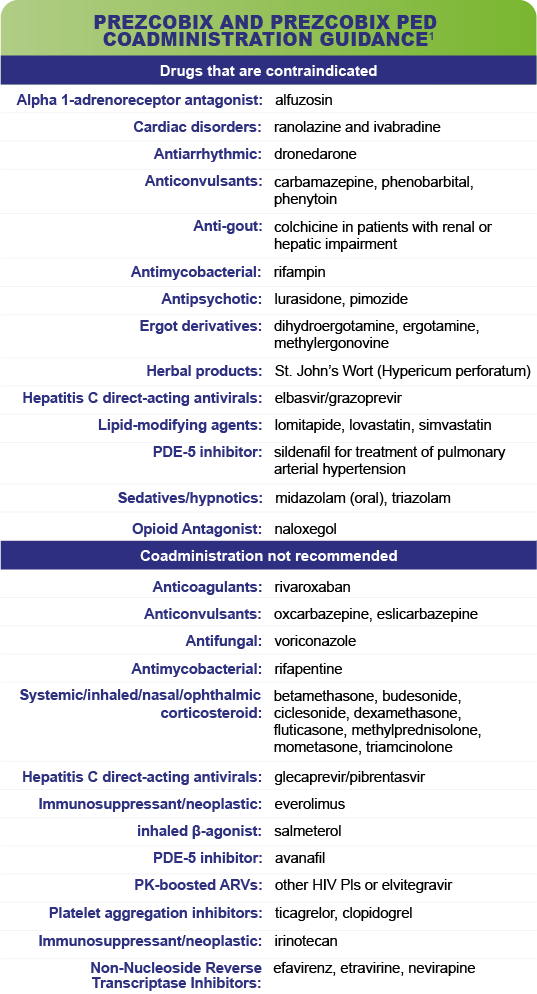
Testing Prior to Initiation of PREZCOBIX or PREZCOBIX PED
HIV Genotypic Testing:
HIV genotypic testing is recommended for antiretroviral treatment-experienced patients. However, when HIV genotypic testing is not feasible, PREZCOBIX or PREZCOBIX PED can be used in protease inhibitor-naïve patients, but is not recommended in protease inhibitor-experienced patients.
Creatinine Clearance:
Prior to starting PREZCOBIX or PREZCOBIX PED, assess estimated creatinine clearance because cobicistat decreases estimated creatinine clearance due to inhibition of tubular secretion of creatinine without affecting actual renal glomerular function. When co-administering PREZCOBIX or PREZCOBIX PED with tenofovir disoproxil fumarate (tenofovir DF), assess estimated creatinine clearance, urine glucose, and urine protein at baseline.
Not Recommended in Severe Renal Impairment1
PREZCOBIX or PREZCOBIX PED co-administered with tenofovir DF are not recommended in patients who have an estimated creatinine clearance below 70 mL per minute.
Not Recommended in Severe Hepatic Impairment1
PREZCOBIX or PREZCOBIX PED are not recommended for use in patients with severe hepatic impairment.
Not Recommended During Pregnancy1
PREZCOBIX or PREZCOBIX PED are not recommended during pregnancy because of substantially lower exposures of darunavir and cobicistat during the second and third trimesters. PREZCOBIX or PREZCOBIX PED should not be initiated in pregnant individuals. An alternative regimen is recommended for those who become pregnant during therapy with PREZCOBIX or PREZCOBIX PED.
ARV=antiretroviral; CrCl=creatinine clearance; DHHS=Department of Health and Human Services; INSTI=integrase strand transfer inhibitor; HMG-CoA=3-hydroxy-3-methyl-glutaryl-coenzyme A; NNRTI=non-nucleoside reverse transcriptase inhibitor; NRTI=nucleoside reverse transcriptase inhibitor; PDE-5=phosphodiesterase type 5; PI=protease inhibitor; PK=pharmacokinetic; TAF=tenofovir alafenamide; TDF=tenofovir disoproxil fumarate.
*DRV RAMs=darunavir resistance-associated mutations: V11I, V32I,
†L33F, I47V, I50V, I54L, I54M, T74P, L76V, I84V, and L89V.1
‡When PREZCOBIX is used with TDF/FTC, HIV-1–infected adults must have a CrCl ≥70 mL/min.1
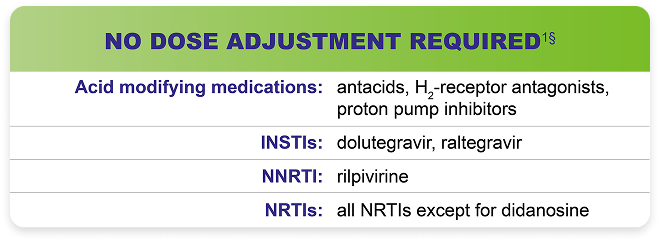
§No clinically relevant drug-drug interaction is expected when PREZCOBIX or PREZCOBIX PED is coadministered.
References: 1. PREZCOBIX [Prescribing Information]. Titusville, NJ: Janssen Therapeutics, Division of Janssen Products LP.